
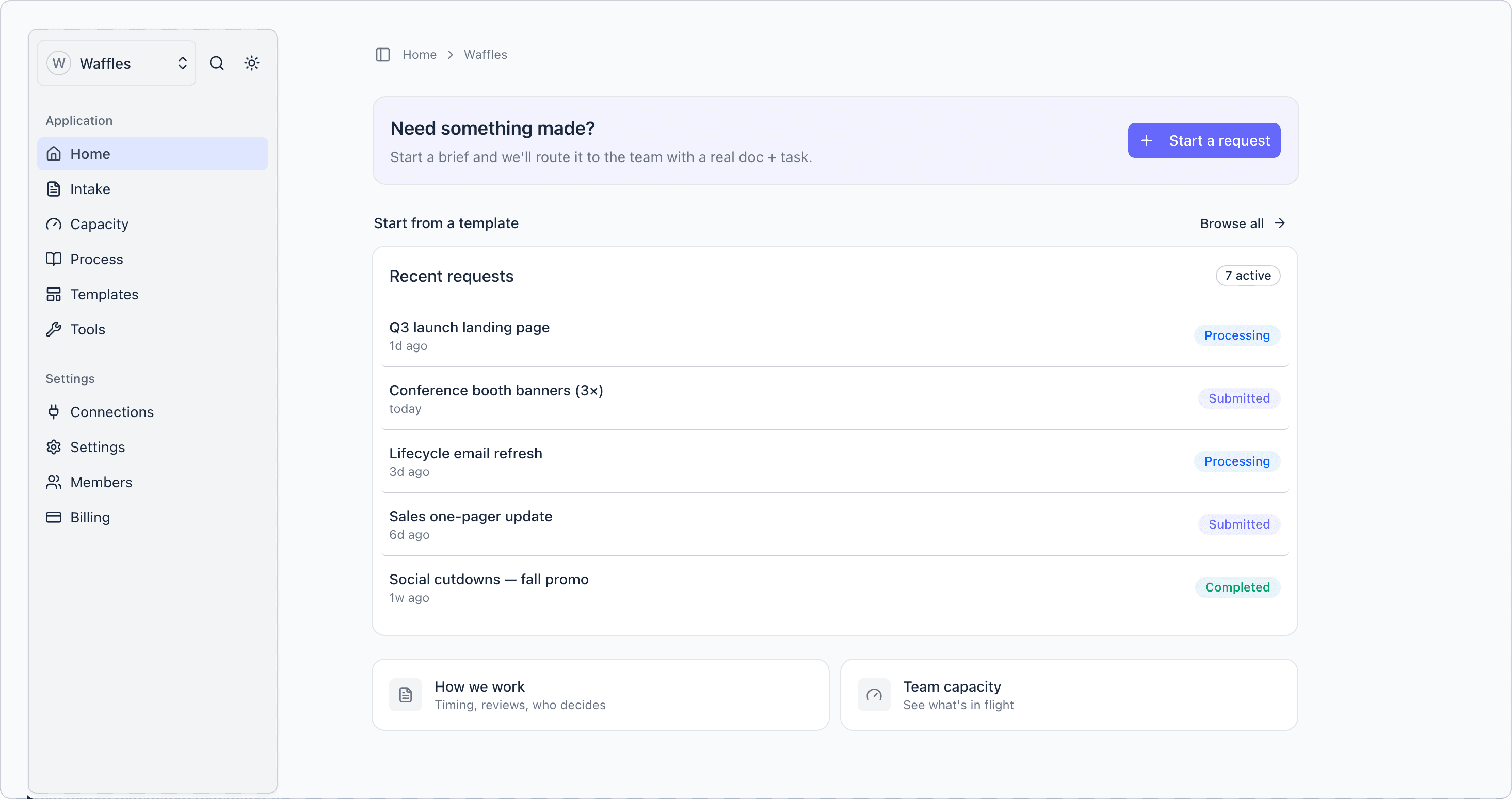
How HQ works

Submit a request
A guided intake form captures exactly what's needed.

Get a structured brief
HQ writes a clean, formatted brief in Google Docs.

Task appears
The work lands in Asana, Linear, or Monday automatically.

Team is notified
A Slack ping fires in the right channel, with the brief linked.
One system, six fewer problems
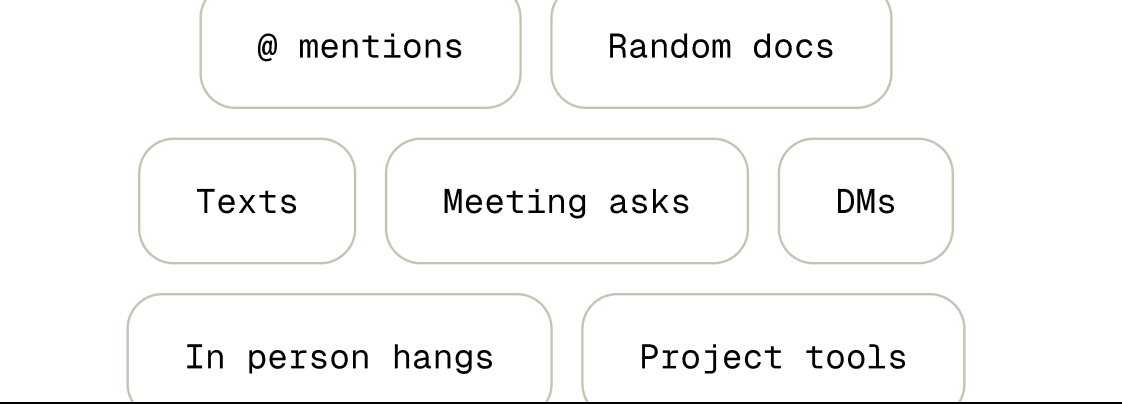
Request overload
Small teams rarely have one intake process — they have five. Work arrives by email, Slack, docs, hallway asks, and a dozen client threads, so no one is sure where to look or where a request actually lives.

One front door
HQ gives every request a single front door. They all start in one place and route to where your team already talks: Slack.
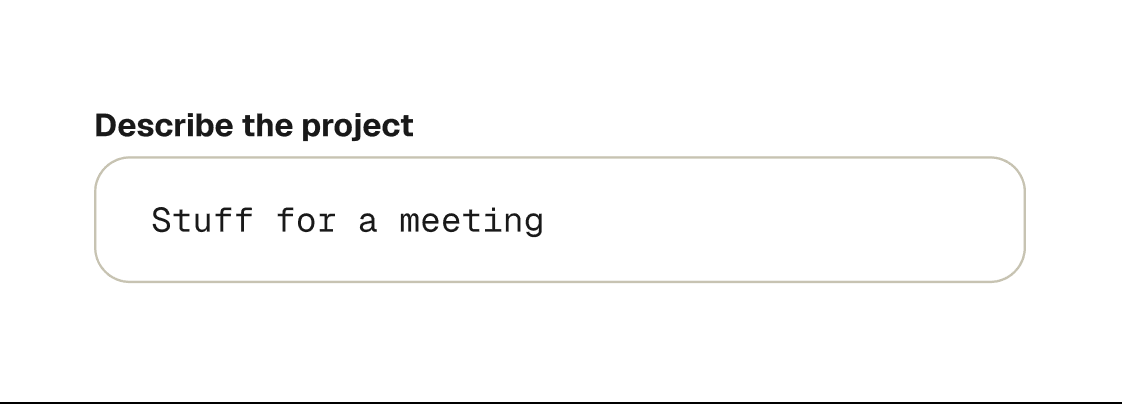
Not enough info
The requests that do arrive are usually half-baked. Your team burns 20+ minutes chasing the details they need before real work can even start.
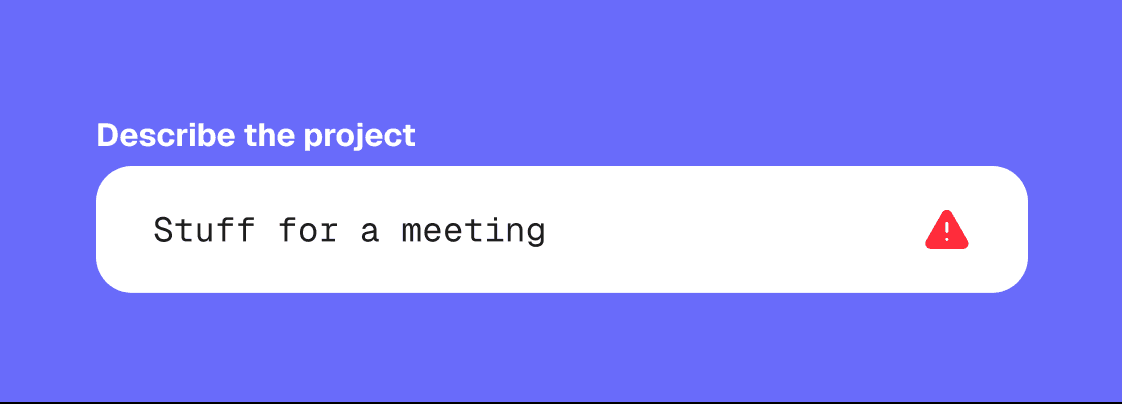
Validated info
HQ validates every request as it is written, with guided prompts along the way — so the brief is complete before it reaches your team.
Unclear priorities
"What is the team — or you — working on?" is a simple question with no easy answer. Without a sense of how long each project takes, every "urgent" ask lands on an already-full plate.

Real-time capacity
HQ shows capacity in real time: what is in flight, how big each piece is, what kind of work it is, and what can wait.
Hidden process
Your team has a process — but no one else can see it. Stakeholders are left guessing, or they invent their own rules.

Clear team process
HQ makes the process visible: turnaround times, review steps, who decides what, and how to give feedback that is actually actionable.
Brand drift
When requestors cannot find approved templates — or do not want to bother the team — they grab whatever tool is handy (often AI) and make it themselves. The result is brand drift.

Brand systems
HQ keeps every template — Canva, Figma, Figma Buzz, custom AI generators — in one place. Need a custom version? There is a request flow for that.

Service partner
Left unchecked, these small frictions add up to one big problem: the team — or you — gets treated as a service desk. They say jump, you ask how high.

Strategic partner
HQ sets the boundaries that reframe the team as a strategic partner — brought in early and often, not just at the end.
Connected to what you already use
HQ plugs into the tools your team already lives in. Simply connect and start sending people in. Nothing to migrate, no new tool to learn.